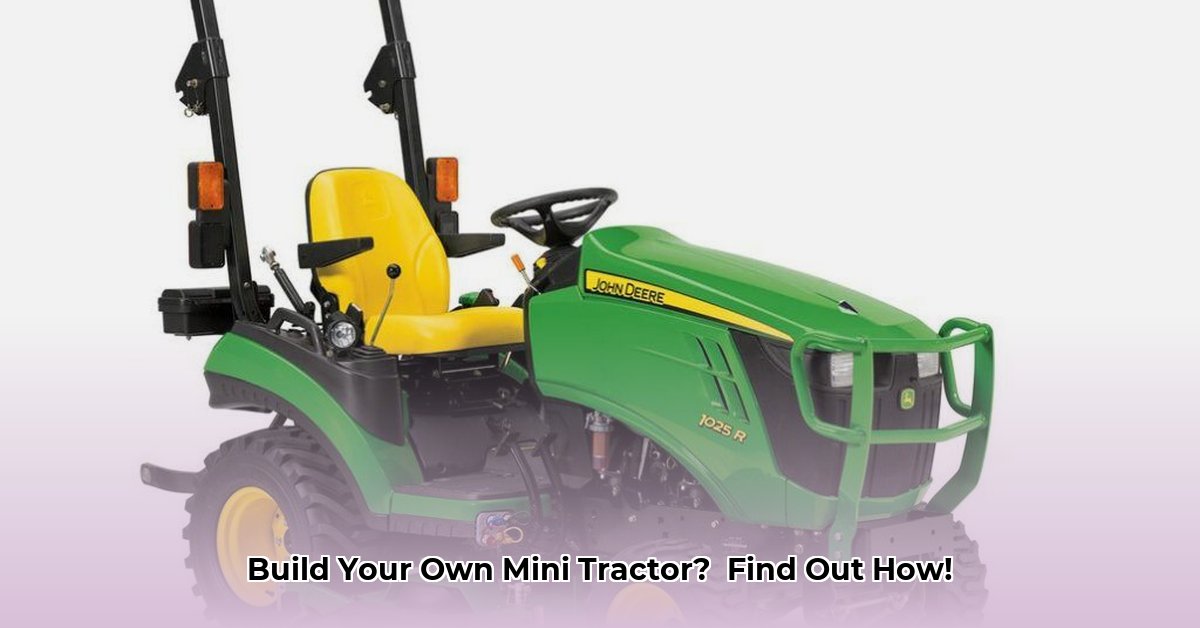
Building your own mini-tractor can be a rewarding and cost-effective way to manage your small farm or homestead. But how much will it really cost? This guide breaks down the process step-by-step, offering cost estimates, timeframes, and skill requirements for each stage, allowing you to tailor the project to your budget and expertise. We'll explore the significant cost differences between using new versus used parts, and highlight key decisions to help you stay on track. For larger projects, you may want to consider using a tractor for heavy lifting, learn more about tractor towing.
Step-by-Step Mini-Tractor Construction: A Cost Breakdown
This guide provides a practical plan to build your own mini-tractor, focusing on cost-effectiveness and realistic timelines. Remember, these are estimates; your actual costs may vary depending on your choices and location.
Step 1: Design and Planning (1-2 weeks, $50-$100)
Begin with careful planning. A simpler design translates directly to lower costs and less time spent on construction. Research existing designs online or in books to find inspiration, which could cost you between $50 and $100. This initial research is crucial for success. What tasks will your mini-tractor perform? Tilling, hauling, or both? This dictates the necessary power and features.
- Cost Breakdown: $50-$100 for books, software, and online resources.
- Skill Requirement: Basic design and mechanical comprehension.
Step 2: Frame Fabrication (2-4 weeks, $100-$750)
Fabricating the frame typically involves welding. If you're not comfortable welding, hiring a professional will increase costs significantly. Consider using reclaimed steel to further reduce expenses.
- Cost Breakdown: $100-$300 for materials (new or reclaimed steel), plus $400-$450 for professional welding if needed.
- Skill Requirement: Welding skills (or access to a welder).
Step 3: Engine and Transmission (1-3 weeks, $500-$3000)
Sourcing a used engine and transmission is a significant cost-saver. However, thoroughly inspect any used components or consider a professional rebuild to mitigate risks. A new engine and transmission adds significantly to the overall cost.
- Cost Breakdown: $500-$1500 (used); $1500-$3000 (new), plus labor for installation (consider $200-$500 for professional installation if needed).
- Skill Requirement: Mechanical aptitude and experience working with engines and transmissions.
Step 4: Hydraulics (Optional, 2-4 weeks, $500-$3000+)
Hydraulics boost functionality but add considerable complexity and cost. Unless essential for your planned tasks, consider omitting them to keep the project more budget-friendly. Used hydraulic components are generally not recommended due to the increased risk of failure.
- Cost Breakdown: $500-$3000+ (primarily for new components; used parts are strongly discouraged).
- Skill Requirement: Advanced mechanical skills, experience with hydraulic systems, and appropriate safety training.
Step 5: Wheels, Axles, and Tires (1 week, $200-$1000)
Used wheels, axles, and tires are great cost-savers, but inspecting them carefully is critical to ensure functionality and safety.
- Cost Breakdown: $200-$500 for used parts; $500-$1000 for new parts.
- Skill Requirement: Basic mechanical skills for installation.
Step 6: Assembly and Testing (2-4 weeks, Minimal Cost)
This stage brings all the components together. Expect some troubleshooting and adjustment.
- Cost Breakdown: Minimal; mostly your time and effort for adjustments.
- Skill Requirement: Mechanical aptitude and problem-solving skills.
Step 7: Safety Inspection and Final Touches (1 week, Variable Cost)
Conduct a thorough safety inspection before operating your mini-tractor. Addressing any safety concerns may incur additional costs.
- Cost Breakdown: Variable, depending on required adjustments or repairs.
- Skill Requirement: Mechanical understanding and awareness of farm machinery safety regulations.
Sourcing Affordable Used Parts: A Strategic Approach
Finding affordable used parts is key to minimizing costs. Explore these options:
- Online Marketplaces: eBay, Craigslist, Facebook Marketplace.
- Local Tractor Dealers and Repair Shops: Inquire about used parts.
- Farm Auctions and Flea Markets: These can yield unexpected bargains.
- Junkyards and Salvage Yards: Be prepared for some digging!
Always thoroughly inspect any used part before purchase.
Skill Level Considerations and Cost Trade-offs
Lacking specific mechanical skills (welding, engine repair, hydraulics) will require hiring professionals, significantly increasing the total cost.
Potential Pitfalls and Mitigation Strategies
- Used Parts Reliability: Budget extra for potential repairs or replacements.
- Time Commitment: Allocate sufficient time; this is not a weekend project.
- Unforeseen Expenses: Always include a buffer in your budget.
Sustainability Considerations
Using reclaimed materials significantly reduces your environmental impact, making your mini-tractor a more sustainable choice.
The Bottom Line: Your Mini-Tractor's Cost
Successfully building a mini-tractor can yield significant long-term savings compared to purchasing a new one. Careful planning, smart sourcing of parts, and a realistic assessment of your skills are crucial for keeping costs down and ensuring project success.